
Kunaroona (Kunar Province of Afghanistan)


Kunar is located in the north-east of Afghanistan with an estimated area of 4339 Km2 and have a long border with the tribal area of Pakistan. Durand Line, which separates Afghanistan and Pakistan, passes through a ragged terrain of Kunar. There are dozens of crossings on the border which are traditionally used for the foot traffic by the local residents, smugglers and insurgents defying the Durand Line. In Kunar, Arandu-Barikot in Ghazi Abad district and Nawa pass in Sarkani district are the two important crossing points between both countries which are also used for vehicle traffic and are important routs for the local trade.


The official name of the province is “Kunaroona” in Pashto and “Kunarha” in Dari, means valleys. However, the province is generally known as “Kunar”. If one sees from the air, the province looks like a long valley with many small valleys on both sides, thus pleural term is used. Kunar population is about 0.5 million of which 98% are Pashtun while remaining are Pashai, Nuristani and Gujar tribes.


Historically, Kunar was a most kinetic province in Afghanistan. Valleys like, Korengal, Pech and Ganjigal, where ISAF faced tough resistance are the part of this province. Stories related to various operations in these valleys are the topics of many recent movies and books. Counter insurgency efforts in the province received six out of 12 medals of honor, the highest US military mark of reverence, awarded during the Operation Enduring Freedom- Afghanistan (www.history.army.mil/moh/afghanistan).


Like other provinces of Afghanistan, Kunar is also unique. About 86% of the province is mountainous and hilly. Agriculture is a major source of revenue for 47% of the households. In the rural area 79% of the households own or work on agricultural land (www.adaptafghan.org/documents/pdf/kunar). Due to hilly topography the agriculture operation is limited to the little land available in the valleys around the river or terraces on the mountain slopes. Wheat and maize are the major agricultural crops of the area, while rice are grown in the area where reliable irrigation is available. Sugar cane and cotton are the only industrial crops of the province. Fruits (mulberry, grapes and walnuts), vegetables (onion and potato) and fodder are mostly grown in the garden plots. However, livelihood in the province is mostly dependent on animal farming. The province has large, predominantly pine and oak forests and also is a one of the pastoral destination of nomadic herds.


Kunar has a rich culture of agriculture. However, 30 years of war have caused severe damages to the agriculture infrastructure. Analyses of soil samples from Kunar classified its soils as “prime soils”. According to Jason Nemecek, a USDA-NRCS soil scientist, who collected and analyzed
the soil samples, reported that such soils in the USA are producing 100 bushels/acre, while in Kunar the production is just 30 bushels/acre, indicating a great potential to increase agricultural productivity by adopting improved farming practices.


Kunar is rich in natural mineral resources. Deposits of precious, semi-precious and industrial use mineral are scattered throughout the province. The provincial Mines Department has identified 180 locations where mineral deposits such as mica, marble, quartz, chromites, talc, antimony, aquamarine, tourmaline, agate, morganite, kunzite and rubelite are available. Presence of emerald deposits in Badal valley are also reported (http://mines.pajhwok.com/news/mineral-resources-kunar).


Commercial activities in the province are mostly related to the timber and gems. Some criminal elements which are still active in the province are involved in illegal extraction of national assets of timber and gems. Extraction of these valuable resources in a non-professional way by these criminals is resulting in the wastage of these valuable resources. However, government is trying its best to protect these resources. Despite of all these resources, Kunar is among the poorest provinces of Afghanistan. As compared to the national poverty rate of 36%, Kunar has a poverty rate of 55-76% (http://www.gao.gov/products/GAO-10-756SP).


Shortage of drinking and irrigation water was identified as a main concern recognized in the provincial development program followed by the livestock and fodder production, energy, sanitation, transport and communication. The provincial development plan was chalked out by the people of Kunar themselves through a vast network of village level community development councils and district development assemblies which provided their inputs to the provincial development council. Many donor agencies have been investing in the areas identified in the plan. The United States led Provincial Reconstruction Team (PRT) at Asad Abad, USAID and Commander Emergency Relieve Program helped rehabilitate irrigation channels and construction of new irrigation control devices in many areas of the province to sustain subsistent agriculture. National Guards Agriculture Business Development Teams helped train thousands of farmers in the newer techniques of crop, vegetable and livestock production and marketing in the province.

In addition, dozens of schools, health care facilities, roads and bridges were also built. Roads, like 121 km Jalalabad-Asmar road which links Nangarhar and Kunar provinces, has tremendously improved the life of the area people. Before the rehabilitation of this road, a bumpy and dusty travel from Jalalabad to Asad Abad was of five hours but now it takes only two hours of a smooth journey. New roads and bridges in various valleys of the province also helped connect remote areas to Asad Abad. These bridges and roads have been providing to local people an access to the services, higher education and other facilities, which are not available in their villages. Infrastructures for various Government institutions like; district centers, provincial headquarter and garrisons for the security forces were also built with the help of the international
partners. Now these institutions are fully functional and delivering much needed services to the Afghan people.


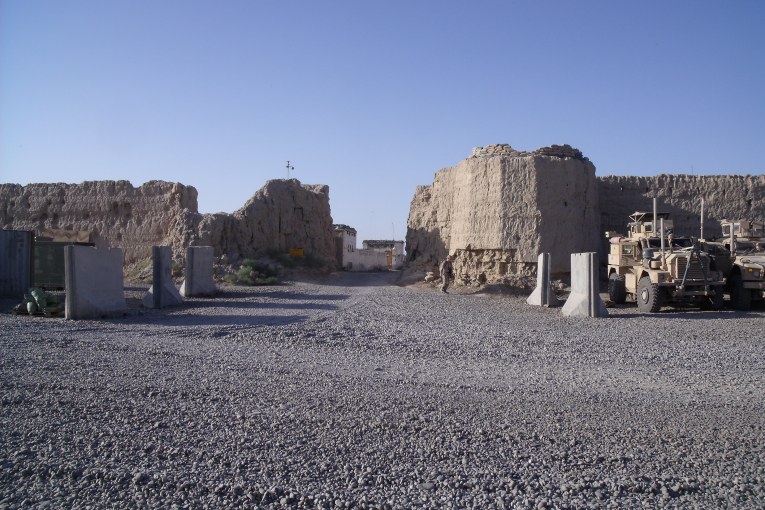
Asad Abad (old name, Chaghasarai) is the provincial headquarter of the Kunar province and is located at the converge of Pech and Asmar rivers. A decade before, Asad Abad was a very small town but now it is bustling with shops and businesses. Many new shopping centers and educational institutions have been established since 2002, making it one of the busiest town of the province. Ibrahim, a resident of village Kerala, who has been witnessing the development process in Asad Abad since 2002, said that the infrastructure built during the last 10-12 years might have taken them more than 100 years to put up, if no help from PRT, USAID and ISAF was available. Provincial Reconstruction Team closed its offices in 2012. Currently, National Solidarity Program and various other NGOs have their presence in the area, supporting the provincial government to achieve its developmental targets.ISAF’s Forwarded Operation Base, FOB Wright, locally known as Topchi base was located about two Km from the Asad Abad’s city center and provincial headquarter.
Kunar is the birth place of Syed Jamal-ud-Din Afghani (1838-1897), a nineteenth century political reformer. According to the oral history, Syed Jamal-ud-Din Afghani was born in the village “Saddar Gutt” in Pashad area which is about 18 km from Asad Abad. Syed Afghani was died and buried in Istanbul, Turkey. In 1944, on the request of the Afghan Government, Syed Afghani’s remains were brought to the Afghanistan and buried in the premises of the Kabul University. In his honor, the name of the Kunar provincial center was changed from Chaghasarai to Asad Abad. The only public sector University in the Asad Abad is also named after him.
In August 2012, Union City, San Francisco, California added Asad Abad as its sixth sister city to celebrate the diversity of its cultures. Since then both cities have established cultural partnership. Kunar is also very scenic and can become a tourist attraction, further strengthening the economy of the area.
New News to Explore


Solid Cut Rates in the Economy, Could We at any point Deal with it?
The public bank is comprehensively expected to cut down supporting costs this year. In any case, with advancement […]
Imran Khan – Former Prime Minister of Pakistan, Sentenced for 10 Years in Jail
ISLAMABAD (AP) — A Pakistani court sentenced previous Head of the state Imran Khan of uncovering official mysteries […]
Categories
- A Journey - Life in the US (2)
- Advertisements (1)
- Afghanistan News (5)
- Articles (5)
- Bollywood Hindi Movies (30)
- Bollywood Punjabi Movies (14)
- Current Affairs (12)
- Europe News (1)
- Event Videos (7)
- Hollywood Movies (16)
- Local News (12)
- Lollywood Urdu Movies/ Drama (48)
- Magazine (1)
- Middle East News (2)
- National News (28)
- Pakistan News (13)
- Punjabi Pharikah - پنجابی پڑھیکا (1)
- Sports (14)
- Urdu Farhang - اردو فرھنگ (15)
- USTPF News (7)
- Video Songs (11)
- World News (1)