
Helmand Province – A Profile

By: Mohammad Mohsin Siddiqui

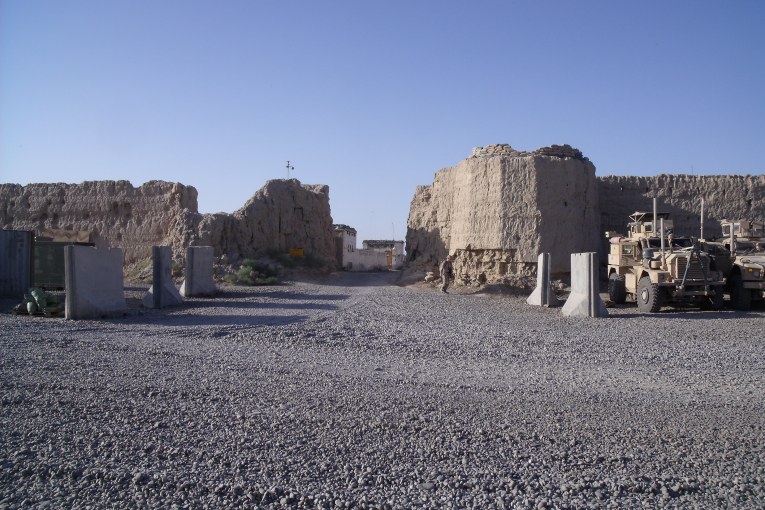
Helmand is the largest province of Afghanistan, located in the south west of the country covering an area of 61829 square Km. Helmand has a population of about 1.4 million, 94% of which is living in the rural area. The province was a part of Greater Kandahar region (included present day Zabul, Helmand, Kandahar and Nemroz provinces) until it gained the status of a full-fledged province in 20th century. Currently Helmand province is comprised of 14 districts with Lashkargah as its provincial headquarter. Helmand has a barren desert like landscape with a very arid climate. Desert in the north part of Helmand valley is known as “Dashat-i-Margo” (desert of death). While south and eastern parts are known as “Registan” (land of sand).

Helmand river is the lifeline of the area, supporting civilization for over 6000 years. The river was a main focal point for the development of early civilization in Western Asia. Archeological excavations in Shahre -i- Sokhta (Burnt City, Iran) revealed that human societies were living around the river basin in Bronze age urban dwellings by 3200 BC (Mortazavi et al., 2011), even before the Harappa of Indus Valley. Origin of Helmand river lies in Koh-i-Baba range in Hindukush mountains. The river travels about 1150 Km and passes through Wardak, Bamyan, Day Kundi, Uruzgan, Helmand and Nimroz provinces before it empties in the wetlands of Sistan depression at the Afghan-Iran border. Sistan is a large closed basin located at the tail end of the river Helmand and is considered as one of the driest region of the world. In Sistan, the river Helmand accumulates in several shallow lakes, known as “hamoons”. The wet lands surrounding these lakes are the largest of its kind in the Western Asia. The ecosystem and economy in and around Sistan wetlands are directly affected by the drought and floods in the Helmand River, because they receive 80% of water from the river Helmand (Verkerdy and Dost., 2006). Long drought during 1998 to 2005 resulted in a complete drying of hamoons on both sides of Afghan and Iran border, killing fish, wild life and cattle.

River Helmand drains about 40% of Afghanistan water mostly from the melting snow. The river steadily increases its volume as it flows from its origin to its junction with Arghandab River, the last tributary of Helmand river. While down steam from this point its volume decreases steadily due to irrigation, evaporation and seepage. It is an important source of irrigation for the areas it passes through, and is the only source of water for the southern part of the Helmand province where it is distributed through an irrigation canals network, commonly known as Helmand valley irrigation system. Agriculture fields surrounding the river are the heart of Helmand agriculture. Cereals, cotton, sugar beet, vegetable and various fruits are the major agricultural products in addition to livestock production.

The construction of the irrigation canals was started back in 1910. Some technical and financial assistance to expand the irrigation canal system was provided by the Japan and Germany governments during 1935-1941. However, development work was halted before its completion due to World Wars. In 1950 Afghan government hired an American company to improve and extend canals network (Zakhilwal, 2004). Construction of Kajaki dam on the river Helmand was included in the project to ensure the supply of water to the canal system. During that time Helmand area became the center of the USA developmental program. The USA government shared the total cost of 136 million dollars of the project by providing 72 million dollars in aid. About 100-meter-high and 270-meter-long, Kajaki Dam and its 300 miles long, concrete lined, irrigation canals were completed in 1955 by the builders who constructed the Hoover dam in Nevada, USA. The main objective of the project was to develop lands for agriculture and to settle thousands of nomads and landless farmers in Helmand province and also to produce electricity. It was one of the world’s major desert irrigation project of its time which created extensive farming zone in the Helmand province by bringing thousands of hectares of barren lands under cultivation and habitation. The Helmand valley irrigation system has three main canals: Boghra, Shamalan and Darweshan. The project helped more than 5500 landless families to settled on the newly irrigated lands. The project also helped native farmers of the area by cultivating more lands and also to grow two crops instead of one in a year. This significantly increased the farm income in the area. However, in mid 70’s due to over irrigation and poor drainage, water logging and salination problems appeared in many parts of the newly developed lands. Efforts to rehabilitate and develop an effective drainage system was initiated with the help of the USA financial and technical support. A major portion (80 million dollars) of 125 million aid provided by the USA to Afghanistan during 1960-1970, was used for the developmental projects in the area. In 1975 the USA renewed its assistance to Afghanistan, mainly focusing to resolve drainage problem in Helmand valley. The USAID commissioned two turbines at Kajaki, each with 16.5 MW capacity to generate electricity. Unfortunately, installation of third turbine and development work on the dam, including raising the dam height and digging an emergency spill way couldn’t complete due to Soviet invasion of Afghanistan in 1979.

Anarchy followed by the Soviet invasion caused severe damages to the Helmand valley irrigation system. Breakdown of water control devices, increased salinity, lack of maintenance and abandonment of lands by the farmers due to war and migration resulted in a sharp decline in the area under cultivation. However, after the establishment of democracy in 2002, the USA and other friend nations made significant investments through Afghanistan reconstruction efforts to rehabilitate Helmand valley irrigation system and to improve Kajaki dam capacities for the production of electricity. Two already installed turbines of Kajaki power house were rehabilitated while work on the installation of third turbine was commissioned in October 2016 adding 1.5 megawatts of power generation (USAID.GOV., 2017). Other associated structures of the dam which were damaged due to war and neglect were also repaired. USAID has provided 128 million dollars for the Kajaki rehabilitation project in addition to the domestic and other foreign resources.
After the USA invasion of Afghanistan, significant developmental work was performed by the Helmand’s Provincial Reconstruction Team (PRT) during the years 2009 to 2014. The Provincial Reconstruction Team for Helmand was a multinational group, comprising of experts from UK, USA, Denmark and Estonia. In addition to Kajaki dam and canals rehabilitation, PRT also supported governance, education, health, agriculture, rural development and anti-narcotic projects (Hague, 2014). In education sector, construction and refurbishment of schools and funding for school supplies resulted in 76% increase in student’s enrollments in 2011 as compared to 2007. Infrastructures for the establishment of provincial and district governments were made possible by ISAF and PRT assistance. The Provincial Reconstruction Team also helped establish new commercial centers almost in every major village of the province by providing financial support to the shopkeepers to construct/repair their shops and purchase inventories. Eighteen thousand youth including 5000 females were provided vocational trainings. Thousands of farmers were also trained in improved agricultural practices to smooth their transition from illicit to licit cop farming. Elders in various areas of the province were also trained in Afghan law and constitution. Many roads in the province were also constructed or repaired to improve access to the major markets. The newly constructed Ring Road also passing through Helmand province thus providing an efficient link to Kabul and other provinces. To improve communication between Afghan Government and its people, Helmand PRT established five radio stations, thus helped GIRoA to counter insurgent’s disinformation.


Helmand has a strong Pashtun identity. About 92% of the province population is Pashtun, predominantly of Durrani and Ghilzai tribes (NPS, 2010). The province also has a significant population of Baluch tribes. Baluch population is more concentrated in the southern part of the province, close to the Baluchistan province of Pakistan. Kuchi, migratory herders, both of Pashtun and Baluch ethnicity are also living in the province. Thousands of Kuchi families who lost their livestock during frequent droughts after ninteen fifties, were settled on the newly irrigated lands thus encouraged to adopt a sedentary lifestyle. Closure of conventional migratory routs due to war and lawlessness also forced many Kuchi families to quit their traditions of seasonal migration with their animal herds. However, there are many Kuchi families who are still adhering to their centuries old livestock production system, moving from place to place in search of pastures for their livestock. Helmand is an unprivileged province. Power in most areas rests in the hands of few feudal lords (Khans) who own majority of the land. While most of the farmers are share-cropper (locally known as Buzgar and kashtkars).

During 1998 drought which was not eased until 2005, the north Helmand was hit very badly because of its dependence on underground water. Drought lowered the water table, drying the wells and underground water ducts (karaiz), the major source of irrigation in the area. For the last several years the Helmand River is also flowing at a record low level, adversely affected the agriculture in the southern Helmand, specially the areas which are not under the command of Helmand valley irrigation system. Poor water management, specially seepage losses, low rain fall and environmental degradation are the factors causing low water level in the Helmand River. Reduced water flow has not been only effecting the dwellers of the Helmand but also the farmers and dwellers of Sistan wetlands both in Afghanistan and Iran. Due to declining health of the Helmand River, farmers are averting water intensive crops and moving to drought resistance crops. Helmand has a great potential for agriculture, livestock, fisheries, forestry and horticulture and these potentials can only be exploited by implementing an effective river water management programs to prevent water wastage and seepage. Efficient water management will help make licit agriculture more profitable and will also protect the delicate ecosystem and economy in the lower Helmand basin and will be a critical element in the reconstruction and stability of the country (Whitney, 2006).

*(Mohammad Siddiqui is a PhD from Texas Tech University. He worked as a Professor at KPK Agricultural University, Peshawar, Pakistan. He also worked as an advisor in Afghanistan).
References:
ADAPT- Agricultural review of Helmand Province, Afghanistan. http://www.fresnostate.edu/jcast/lab/documants/pdf/adapt/HELMAND.pdf
Hague, W. 2014. Helmand PRT. Written statement to parliament by foreign minister. https://www.gov.uk/government/speeches
Mortazavi, M., Mishmast, U., Good, I. 2011. Bronze age textiles: A preliminary analysis of fragments discovered at Tepe Dasht, Sistan. Iranian Journal of Archeological Studies. 1:1. www.ijas.usb.ac.ir/pdf_459_30f679de527f806df5006a93b36a7ab7.html
NPS 2010. Program for culture and conflict studies – Helmand Province. Province.www.nps.edu/progress/ces/Helmand.html
Timkovach 2011. Helmand Province, Afghanistan. Conflict and climate change. ICE case study 261. www1.american.edu.ted/ICE/helmand.html
USAID. 2017. Indtallation of turbine generator unit 2 at Kajaki dam hydropower plant Kajaki unit 2DABS inks contract to install final turbine at Kajaki. USAID press release. https://www.usaid.gov/sites/defaults/files/documents/1871/pdf
Vekerdy, Z. and Dost, R. 2006. History of environment change in the Sistan Basin. Based on satellite images analysis: 1976 – 2005. Editor, Hassan Partow. UNEP Post Conflict Branch, Geneva. http://postconflict.unep.ch
Whitney, J.W., 2006. Geology, water and wind in the lower Helmand Basin, Southern Afghanistan. US Geological Survey Scientific Investigation Report 2006-5182.Reston, VA. https://www.usgs.gov/sir/2006/5182/pdf/SIRO-5182_508/pdf
Zakhilwal, O. 2004. The Helmand valley project. Institute for Afghan Studies., Archived article. https://www.institute-for-afghan-studies.org/helmand
New News to Explore


Solid Cut Rates in the Economy, Could We at any point Deal with it?
The public bank is comprehensively expected to cut down supporting costs this year. In any case, with advancement […]
Imran Khan – Former Prime Minister of Pakistan, Sentenced for 10 Years in Jail
ISLAMABAD (AP) — A Pakistani court sentenced previous Head of the state Imran Khan of uncovering official mysteries […]
Categories
- A Journey - Life in the US (2)
- Advertisements (1)
- Afghanistan News (5)
- Articles (5)
- Bollywood Hindi Movies (30)
- Bollywood Punjabi Movies (14)
- Current Affairs (12)
- Europe News (1)
- Event Videos (7)
- Hollywood Movies (16)
- Local News (12)
- Lollywood Urdu Movies/ Drama (48)
- Magazine (1)
- Middle East News (2)
- National News (28)
- Pakistan News (13)
- Punjabi Pharikah - پنجابی پڑھیکا (1)
- Sports (14)
- Urdu Farhang - اردو فرھنگ (15)
- USTPF News (7)
- Video Songs (11)
- World News (1)