
Khanashin District, Helmond, Afghanistan

By: Dr. Mohammad M Siddiqui


Khanashin (KN) district previously known as Reg district, is located in Registan desert, a very arid plateau shared by both Helmand and Kandahar provinces. Khanashin district is mostly covered with sand dunes, sand covered planes, and open rocky and clay areas. Sand dunes are about 50-80 feet high, and due to their crescent like shape known as Barchan dunes. Khanashin is also the name of the key village or town which is also the district headquarter. The word Khanashin means a place where Khans (big landlords) live and it is still true for Khanashin.


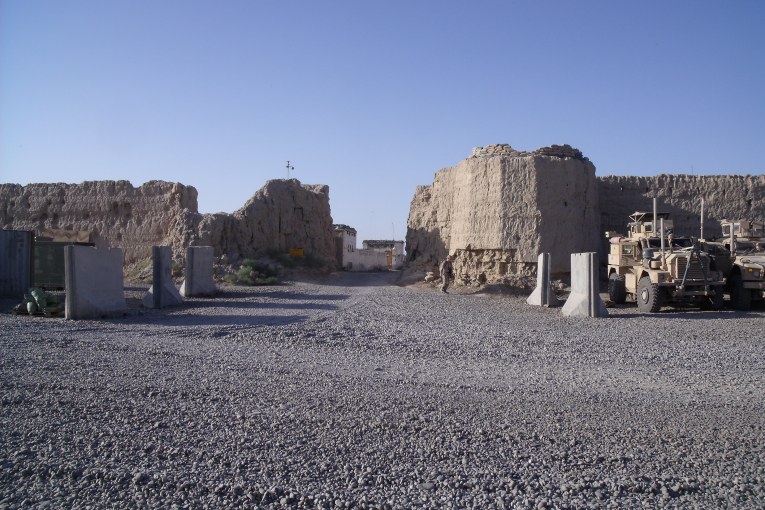
Most of the land in the area belongs to few landlords or Khans and majority of the farmers are tenant or having very small land holdings. Khanashin is a historical area. One can see remains of old structures throughout the district. Khanashin Castle is an historical monument of the area. District Center and it associated offices are located inside the castle. An ISAF combat out post and district police headquarter are also stationed in the castle. The district was mostly under the insurgents control until July 2009 when International Security Assistance Forces (ISAF) and Afghan National Security Forces (ANSF) after a campaign, “Operation Khanjar” raised Afghan flag on the castle. In 2014, as soon as the ISAF left the area, the district fell again to the insurgent groups.


Occasionally camels can be seen wandering in the desert but vegetation in the desert is very sparse. Plants which can help to stabilize desert sand and provide forage for animals, are disappearing quickly, due to their indiscriminate harvesting for fire wood. Even tractors were used to pull plants along with their roots. One time while travelling we helped a poacher to pull his tractor which was stuck in the sand while pulling a very deep rooted plant. Lack of any afford for re-plantation in the desert for decades and removal of existing deep rooted plants has greatly increased the desertification of arable lands in the area.


In Khanashin life revolves around poppy cultivation. Due to poor soils, high inputs cost, land rents and none availability of market for agriculture produce, licit crops are not considered economical. On the other hand, poppy fetch greater price, sold at a farm gate, and doesn’t need any special storage conditions. It is also easy to get loans against cultivated poppy crop. In the year 2011 when district government loudly sent the message that poppy cultivation will not be tolerated, many families moved to Dishu, a district next to Khanashin, where there were plenty of chances to evade government restrictions.


Due to abundance of vegetation on river bank, the district is also known as green district. There is a long strip of jungle on the north west bank of the river, which is a state property and is a source of fuel wood for the area inhabitants. For last few years some influential Khans had burnt some parts of the jungle and grabbed the land for poppy cultivation. Most of the villages are located close to the river on its north west bank. Irrigation canals are originated from the loose masonry dams from the river Helmand are the main source of water.


These dams and canals are community built and each village is responsible for the repair and maintenance of its respective dam and canal. Irrigation water is managed by a water watch man locally known as “Mirab” in each village. Mirab is appointed and paid by the villagers. Every year villagers volunteer hundreds of man hours to repair these structures, an impressive example of community cooperation. Water pumps are also used in many areas to impel water from the river or a canal for irrigation purposes. As the soil is sandy, huge amount of water seeped through these canals before irrigating their designated villages.


This seepage causing water logging, turning large areas of cultivable land into swamps in almost every village. Only available solution with the farmers to reclaim their water logged lands is to dig drainage canals (locally known as Zabers) to direct excessive water back to the river. Due to high cost of excavation very few farmers can afford digging drainage canals. Many time farmers prepared their lands for cultivation and suddenly water started rising, deprived farmers from all their investments. There are five major canals in the district: Dewalak, Khanashin, Kila-i-Now, Khairabad and Taghaz. These canals are named after the villages which these canals intended to irrigate.
There is no paved road in the district except a 3-4 Km road, which is build in 2012 and passes through the Khanashin bazaar. A new school is also constructed to replace the old structure. During the year 2012 the school was offering education only for first five grade. Last year about 40 students were enrolled in the school. Only one teacher was teaching all the classes. Grades one to three were combined in one class for the morning session and grades four and five were combined for the afternoon session. District government at that time made a lot of afford to hire more teachers but due to low pay and insecurity in the area no teacher from other areas was willing to work in Khanashin. In 2012 the Khanashin clinic was moved to a newly constructed building and was staffed with a qualified doctor and two nurses. All these construction projects were made possible with the US reconstruction affords.


Khanashin is mainly populated with Pashtun and Baluch tribes and many of them were nomads. Baluch tribes are concentrated in the areas across the river which is bordering with Baluchistan province of Pakistan. Due to little influence of the district government in the border area, smuggling is an important source of income for the area people.
The area across the river is extremely arid, almost without any arable land. There is no bridge on the river. Boats are the only way to cross the river when water level is high, otherwise at certain points a vehicle can cross the river.


Khanashin people are very friendly and hospitable. Although poverty is wide spread and living conditions are harsh, people are generous. Many time when I was travelling in the area with my team I enjoyed their hospitality. They always offered us food and tea even they were not having for their own kids.


A detailed research need to be undertaken to find out ways to help make licit agricultural crop production a profitable activity. US Geological Survey has reported the presence of large amount of mineral deposits including Light Rare Earth Elements (LREE) in Khanashin. Exploitation of these mineral resources can provide off-farm job opportunities, thus alternative livelihood for the area farmers.
New News to Explore


Solid Cut Rates in the Economy, Could We at any point Deal with it?
The public bank is comprehensively expected to cut down supporting costs this year. In any case, with advancement […]
Imran Khan – Former Prime Minister of Pakistan, Sentenced for 10 Years in Jail
ISLAMABAD (AP) — A Pakistani court sentenced previous Head of the state Imran Khan of uncovering official mysteries […]
Categories
- A Journey - Life in the US (2)
- Advertisements (1)
- Afghanistan News (5)
- Articles (5)
- Bollywood Hindi Movies (30)
- Bollywood Punjabi Movies (14)
- Current Affairs (12)
- Europe News (1)
- Event Videos (7)
- Hollywood Movies (16)
- Local News (12)
- Lollywood Urdu Movies/ Drama (48)
- Magazine (1)
- Middle East News (2)
- National News (28)
- Pakistan News (13)
- Punjabi Pharikah - پنجابی پڑھیکا (1)
- Sports (14)
- Urdu Farhang - اردو فرھنگ (15)
- USTPF News (7)
- Video Songs (11)
- World News (1)